Disentangling Depression

All the most commonly prescribed drugs for treating depression launched 25-65 years ago.
Yet, only one-third of MDD patients receiving antidepressants achieve complete remission after their first antidepressant therapy and up to half never achieve full relief. For those that do find relief, it typically takes 4 - 8 years from symptom onset to effective treatment.
Globally, MDD is the second largest contributor to years lived with disability.
It isn’t that people aren’t trying. Many novel drug classes and targeting hypotheses have risen and fallen with little definitive success. It’s that it’s been one of the hardest areas to explore.
Neurological conditions are the outcome of higher-order brain states that emerge over long periods of time.
They are black boxes that we can hardly probe or collect data on.
No wonder there’s a serendipitous aspect to all currently successful drugs.
Our methods are so blunt that the following two patients will get the same diagnosis and treatment. The first walks into the psychiatrist’s office saying he’s sleeping too much, can’t get out of bed, doesn’t report problems with anxiety, has intense carbohydrate cravings, and has put on 30 pounds. The next person through the door may say her anxiety follows her everywhere, is jittery, doesn’t sleep through the night, has no appetite, and keeps losing weight.
It’s kind of a miracle that our treatments work as well as they do!
Though precision psychiatry is still in its infantile stages, we’re finally inching closer to teasing apart the disease’s multiplicity, understanding the specific circuits that drive distinct mental states, the subtypes that arise from combinations of circuits, having the tools to diagnose specific subtypes in clinical settings, and creating drugs that target individual circuits.
Each of those is in meaningfully different stages of development and are worth unpacking in their own right.
Discovering and Drugging Depression’s Distinct Circuits
How can the two people above, completely different in their symptoms, get the same diagnosis? Depression is currently diagnosed by a subjectively reported checklist of symptoms. “Yes” to trouble sleeping, “yes” to weight change, “yes” to a depressed mood, etc would all yield points that get tallied into a cumulative score. A high enough score may get someone a diagnosis.
Obviously, subjective and willful self-reporting makes for an awfully shaky foundation, but the various rating tools can’t even agree on which symptoms to include as criteria in the checklist! Only “sad mood” occurs across all seven rating scales.
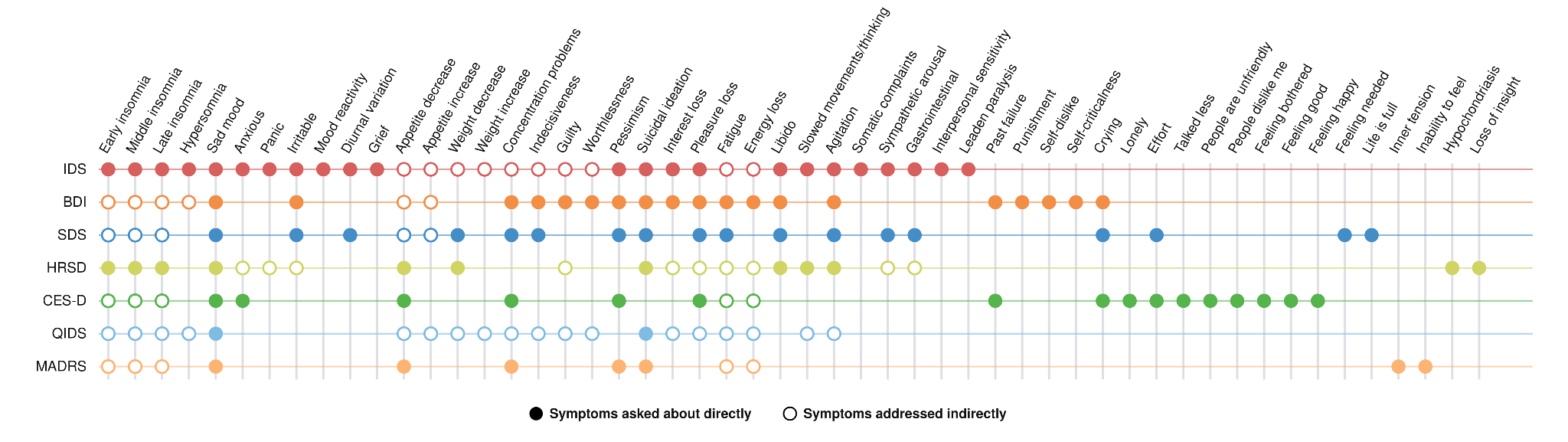
Beyond basing diagnosis on subjective self-reporting, we know that different MDD patients have very different underlying biology. As one well-validated example, women are twice as likely to be affected by MDD than men and three times more likely to have a specific subtype of atypical depression, that includes hypersomnia and weight gain. In a recent study, of the 700-900 genes differentially expressed in men and women with MDD, only 21 were changed in the same direction in both sexes. Sex is just one axis upon which MDD’s molecular mechanisms varies.
Thankfully, the time’s are a changin’. Over the last decade, several of the top MDD academic labs have made concerted efforts to pool together fMRI datasets to discover and validate depression subtypes defined by the underlying biological circuits driving the disease, not reported symptoms.
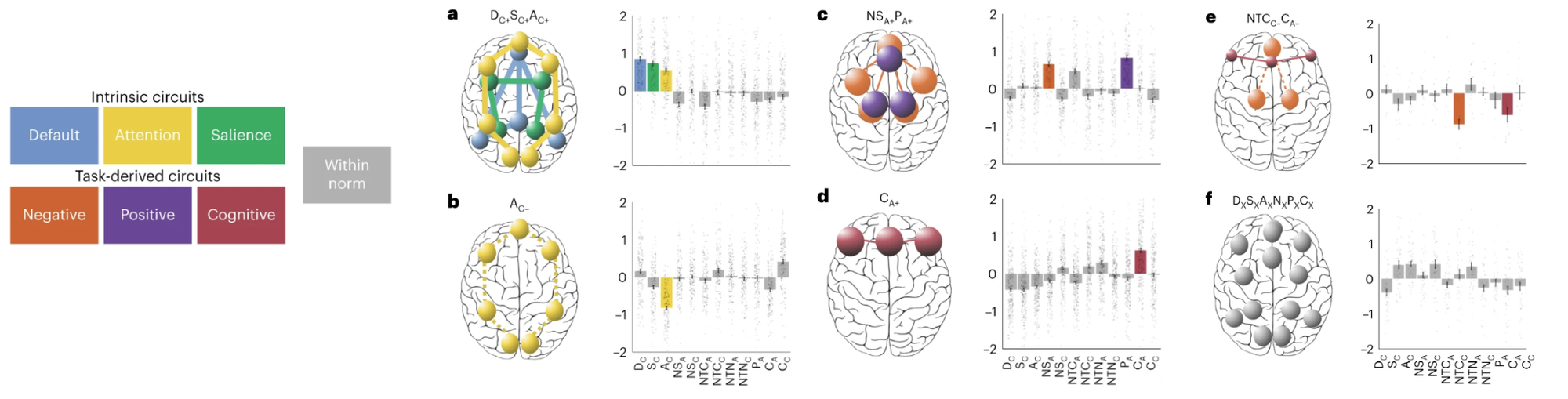
To be fair, these haven’t been prospectively validated on independent cohorts, the initial attempts at replication have been mixed, each different group identifies a different set of subtypes, and the MDD field’s prior attempts at precision pharmacogenetics were unequivocally uneventful.
But these efforts’ intention feels rooted in sound logic, a couple cherry-picked small-scale trials show hints that the protocols might work, and more definitive signals will arrive soon with 300+ person precision subtype-based MDD trials reading out next year.
Some studies have even aimed to extend beyond predicting which drugs will work best for a given patient to attempting to predict when they’ll fall into a depressive spell. For instance, Liston et al scanned people dozens of times with fMRI as they moved into and out of depression. They found that people with depression often have a doubly expanded brain “salience network.” While its topology remained stable regardless of symptoms suggesting a marker of vulnerability to depression, its connectivity appeared to predict the onset of symptoms like loss of pleasure.
A core limiting factor for this field is that the datasets are still tiny. The largest fMRI datasets are hundreds of depressed patients. Scaling them rapidly feels unlikely given how tedious and expensive the machines are.
Compound portfolio company Atlas could help. Their EEG-based wearable can loosely be thought of as an Öura ring for your mind, continually and non-invasively measuring brain states. It can’t be understated how revolutionary a shift continuous objective measurement in real day-to-day life would be from the current subjective, self-reported, moment in time snap-shot.
Beyond establishing objective personal baselines, this means that for the first time we could capture shifts in mood, emotion, and brain state as they happen, alongside the events that trigger them. Connecting those patterns could help us understand what triggers symptoms or relapse in neurological and psychiatric conditions, detect early warning signs, and identify when and how to intervene.

In addition to these fMRI and EEG brain scanning approaches, hints have emerged of effective blood tests, genetic markers of response, and possibly even olfactory neuron samples.
For patients, moving to objective measures of the underlying biology that lead directly to a diagnosis for a specific therapeutic approach may also make it feel more hopeful and likely to work than the current mess.
It may also remove some stigma around seeking treatment by making it feel more scientific or more like any other diseases or injuries where a specific biological circuit is identified and then dealt with.
In other words, once patients see it as a specific, tangible biological circuit they can point to that causes the end output not “something’s wrong with me” or “I need to snap out of it” or an amorphous problem with cloudy thoughts, it may delink the stigma and feel more like going in to get your heart checked.
Discovering Drugs to Treat MDD
Given how few new drugs have made it to later stage trials and how all approved drugs were discovered in part thanks to serendipity and how hard it is to collect molecular data on the disease, we found ourselves asking how does one even go about trying to discover entirely new drugs in this space? Do we have the tools required to discover new drugs?
Genetics, a guiding light in modern discovery, has been of little help thanks to how polygenic MDD appears to be. Despite twin studies suggesting that as much as 37% of depression predisposition is genetic, GWAS studies have found no variants that offer outsized protection or liability. While some in the field suggest that we simply need larger studies, the hope of finding a PCSK9- or APOE ε3/4-level finding at this point feels relatively low given that those unusually strong effect genes are often found in studies of far less than the now ~700,000 MDD cases in SotA GWAS studies. In fact, both PCSK9 and APOE were discovered from cohorts of just 100s of people and then validated longitudinally on 10,000 people).
With that said, maybe genetics’ limited findings so far is partially explained by how poorly we can objectively measure mental state. I.e. if there were rare protective variants, we wouldn’t know they had unusually resilient mental states because we can’t measure that.
Molecular human data is painfully hard to come by as there’s of course no way to sample from living people. The largest transcriptomic study to date has samples from just 450 individuals. The samples are largely from suicide victims and thankfully that particularly tragic type of death doesn’t seem to have a meaningful effect on their transcriptome relative to the broader MDD cohort, so hopefully those samples should translate.
Moreover, animal models are similarly messy and mildly informative. After all, you can’t ask a mouse how they’re feeling or their stressors at work!
In lieu of having them see a psychiatrist or having penetrant genetic causes to install, the animal models typically involve scaring them silly or making them feel acutely isolated.
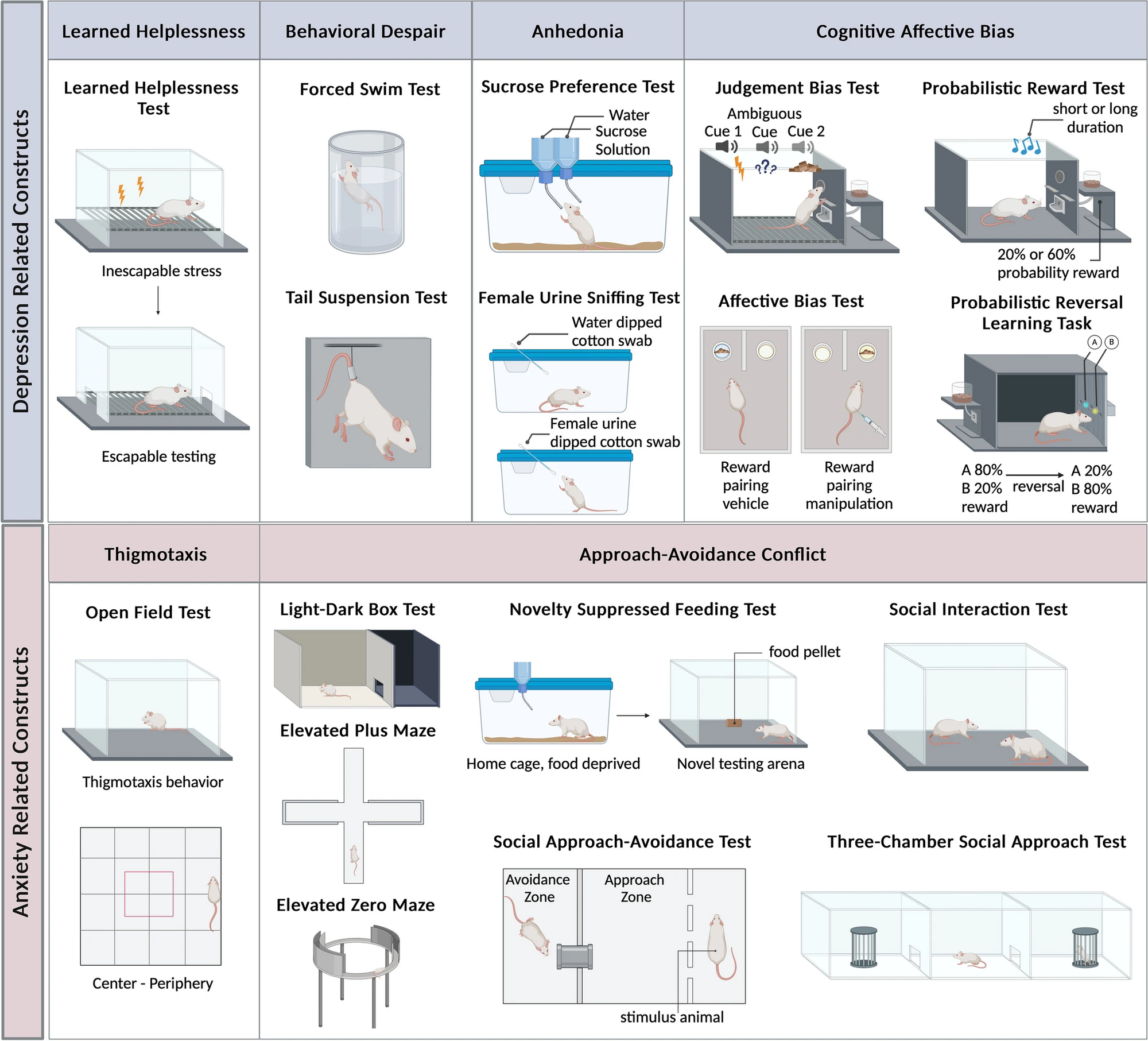
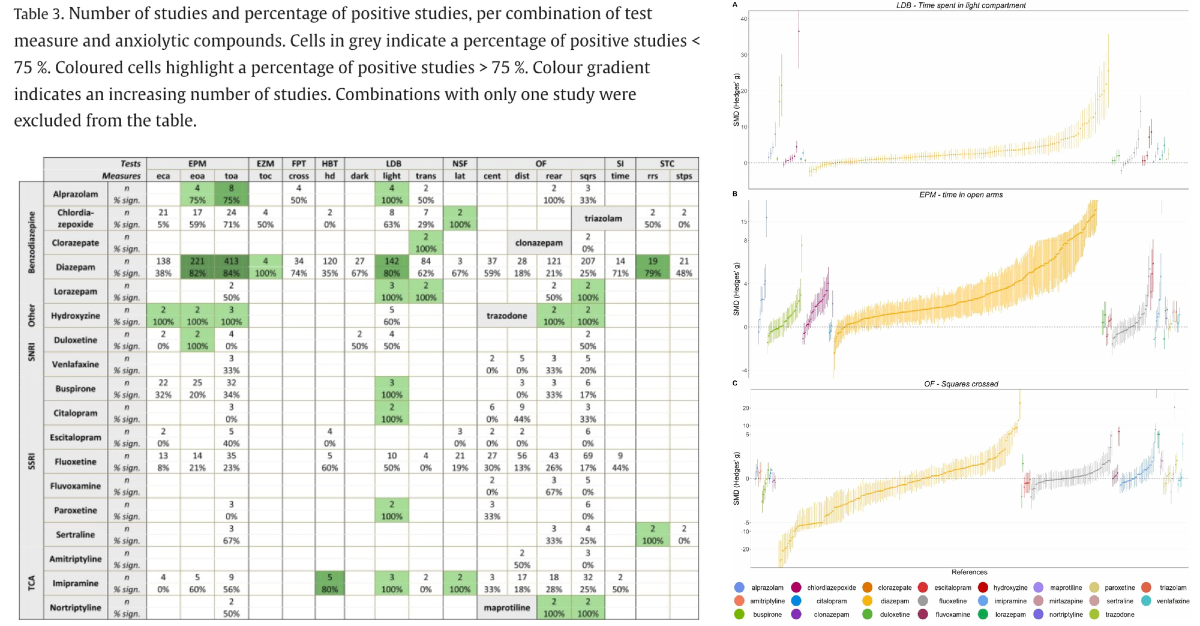
Of the few meta-studies that have sought to quantify the various models’ predictive validity in testing novel drugs, very few give broad support to individual tests and most suggest that at best they’re useful when multiple different tests corroborate the same result. The most comprehensive meta study found that only two of the tests appear reliable across drug classes in anxiety and that most of the tests’ effect sizes from individual studies were spread almost perfectly symmetric around the no effect.
Part of the problem is of course the limited fidelity of the models themselves. A recent study compared the transcriptional signatures of humans with MDD with three mouse models and found that just 20-30% of human gene networks are conserved in all three models but that 70-80% of human networks are found in at least one model.
The other part is the consistently high variance between labs. Some studies even suggest that factors from the perfume worn to the gender of the experimenter to a nearby wildfire smoke can affect results.
Both factors above were emphatically underscored by every expert we spoke with: that one must do the experiments carefully and that no one test is useful in isolation but that if several tests point in the same direction then you have an okay signal.
They also said to move towards measuring the circuits themselves and prioritizing behaviors supported by conserved neural circuitry, even when they lack obvious face validity. Administer the drug, clear the entire brain, image it with light-sheet microscopy, and map changes in selected plasticity-associated readouts across all regions simultaneously. This provides an unbiased, whole-brain view rather than restricting analysis to a preselected region. They claim that approach can have similar statistical power with 4 animals vs 10-20.
Lastly, the in vitro tests are getting more compelling, including cellular neuroplasticity assays that are just now approaching being able to generate concentration-response curves for neuroplasticity-promoting compounds, which is necessary to compare potency and efficacy.
Breaking Through the Stalemate
While the major antidepressants all work by increasing monoaminergic function, many pathways implicated in MDD have yet to be successfully translated, including other altered neurotransmitters (e.g. GABA, glutamate, peptides, cannabinoids), signaling pathways (e.g. BDNF/TrkB, ERK, Akt), hormonal regulation (hypothalamic–pituitary–adrenal axis), epigenetic changes (histone acetylation and methylation), glial dysfunction (astrocyte deficits), inflammation (excess proinflammatory cytokines), and reduced plasticity (hippocampal neurogenesis and hippocampal/cortical synaptogenesis).
Ketamine and psychedelics are seemingly the first to convincingly break through this stalemate. They’re the first antidepressants to be fast-acting and durable. It’s thought that ketamine’s fast action is attributable to the fact that it directly increases NMDA signaling whereas conventional antidepressants do so indirectly via a circuitous journey of upregulating various other pathways that eventually lead there. These effects can be initiated within even 20 minutes.
They also promote increased connectivity between brain regions that become increasingly isolated and desynchronized in MDD.
That connectivity is then physically instantiated by the formation and strengthening of dendritic spines, or connections between neurons. This reverses the loss of spines and synapses caused by chronic stress and depression. It’s what enables these treatments’ benefits to last week(s). Increases in physical connectivity between brain regions have even been found with fMRI to sustain for a month.
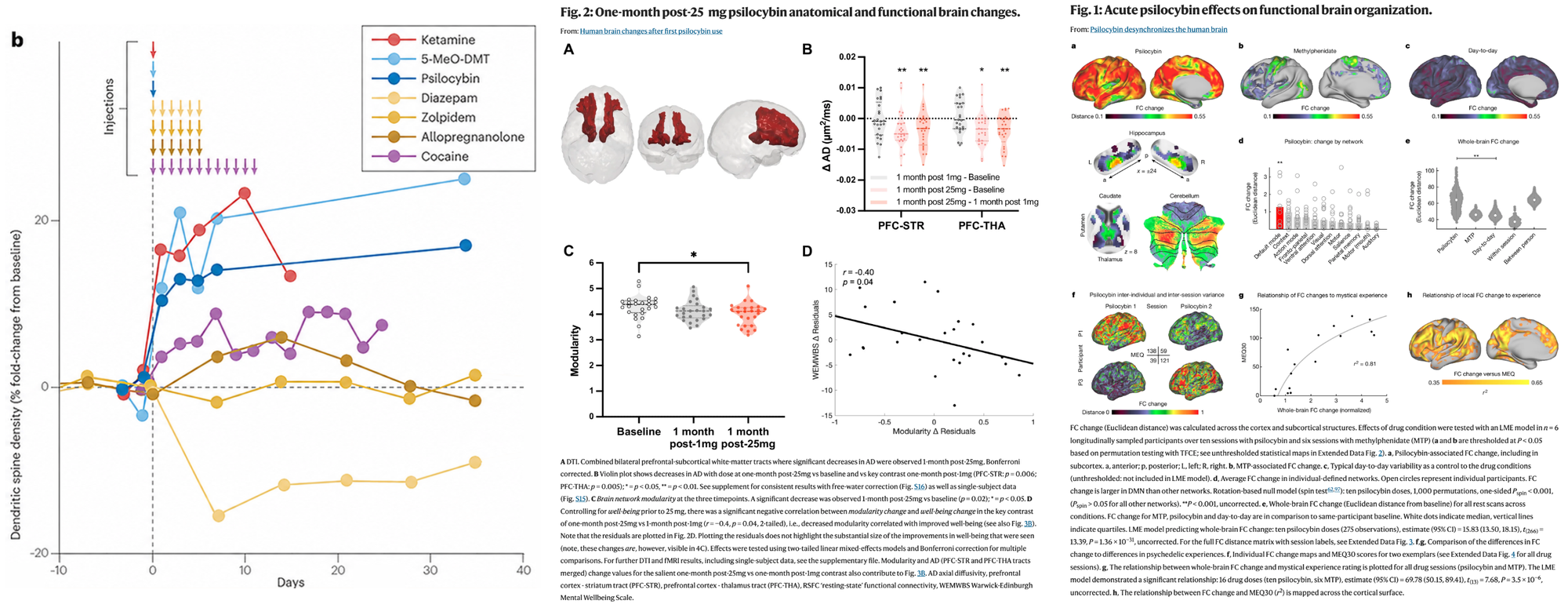
What exactly drives these drugs’ lasting benefits is still being worked out. It appears that the degree of spine restoration correlates with how long the benefits persisted, though it’s not clear how much it matters which spines are restored. In animal models, ketamine restored the total number of spines, but only partially restored the original arrangement of those spines, approximately half of the new spines appeared where a spine hadn’t existed before stress, and which spines are created may be dependent on mental state at the time of dosing. All of that could impact or limit the drugs’ effectiveness.
Either way, these drugs’ durable plasticity changes fly in the face of common knowledge that you need to be hitting the receptor 24/7.
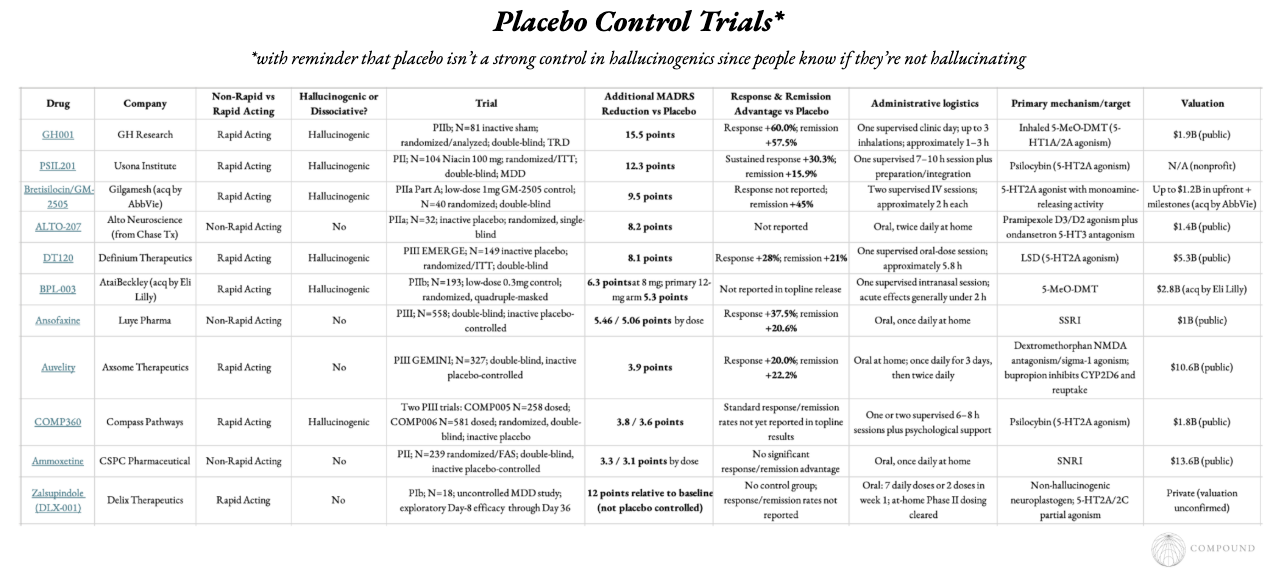
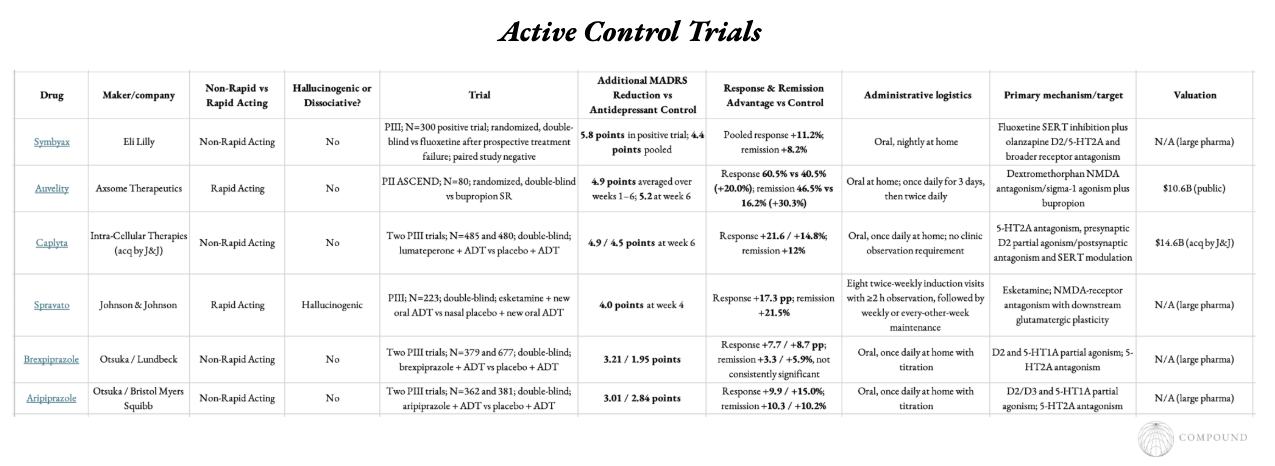
And yet, they appear reasonably effective across multiple PIII trials. A high-level benchmark to hit is +4-6 MADRS benefit relative to placebo or +2-6 relative to active antidepressant treatment. That will make you a strong candidate for a $1B+ acquisition if desired.
Efficacy Without the Trip
We’re excited about efforts to extend these rapid-acting, long-lasting effects without the side effects including hallucination, ego dissolution.
The trip severely limits access. Each dosing requires an up to 8-hour trip. Many patients simply don’t want such an intense experience, one where they can lose control of their thoughts. For the willing patients, it means they may have to miss substantial work and travel regularly to a clinic (those that live 20+ miles away are 50% less likely to start treatment). Just half of patients make it to 8 weeks.
For providers, it requires 40+ hours of trained physician-time to guide every patient through treatment. The clinics that specialize in this often struggle to break even financially. This will make them unusually costly to deliver and will make the drugs’ profitability far lower than therapeutics’ normally juicy margins. Because they’ll be priced at such a premium and are so burdensome to deliver, psychedelics typically only target TRD (which is just ~15% of overall depression cases) and are typically 4th or 5th line in TRD.
The barriers above have meant that even within TRD fewer than 2% of patients have received esketamine despite it being one of only two approved treatments and the only one in decades.
These reasons explain why psychedelics companies are valued so much lower than their efficacy would at first glance suggest. Novel non-hallucigenic antidepressants that can service the broader depression population like Auvelity or Caplyta get taken out for $10B+ vs at most $2-3B for the premier psychedelics companies like AtaiBeckley.
The most immediate goal for the field is to come up with a fast-acting antidepressant with durable neuroplasticity changes that doesn’t have the side effects of either psychedelics or SSRIs.
Given how difficult truly de novo discovery is in this space, most efforts will work backwards from proven starting points, including psychedelics to try to retain the benefits while stripping out the less desirable aspects. The most promising approaches seek to more selectively target the driving pathways, including:
- Partial agonists: Drugs that bind 5-HT2A but activate it only weakly or incompletely
- Agonist-antagonist combinations: for instance, combining a 5-HT2A agonist with an antagonist, hoping that the residual signaling preserves therapeutic effects while reducing hallucinations (e.g. see this paper)
- Biased agonists: targeting well validated pathways but in a way that selectively favors desired downstream signaling pathways while largely avoiding the non-desirable ones (e.g. see these papers)
- Finding non-canonical targets implicated in these pathways: moving away from ubiquitously expressed receptors like serotonin or glutamate to find targets that are more niche like neuropeptide receptors and thus possibly more selective (e.g. see this paper)
- Combinatorial targeting of individual receptors: targeting multiple individual targets that together sum up to recreate the desired therapeutic effect but without the unwanted activated pathways
These efforts have plenty of white space to play with because psychedelics are exceptionally promiscuous. They activate all kinds of GPCRs, TrkB, NMDA receptors, etc. Disentangling which effects drive antidepressant and neuroplasticity and which cause ego death will take many years.
Two approaches in particular exemplify the sort of platform approach we at Compound get excited about.
David Olson and his spinout Delix engineered a fluorescent biosensor whose signaling depends on 5-HT2A’s exact ligand-induced conformation. Their hypothesis that hallucinogenic and non-hallucinogenic ligands stabilize different receptor conformations proved correct: their tool detected distinct signatures despite looking similar in conventional functional assays. They’ve advanced an asset into PII that in preclinical models has antidepressant effects and promotes neuroplasticity without triggering the head twitch response.
Another group is working backwards from the cells mediating ketamine’s benefits, using RNA sequencing to identify other GPCRs enriched in those cells and testing which offer alternative ways to produce the same response. They found a pathway that drove ketamine’s therapeutic effects and then combinatorially recreated those effects with a cocktail of three drugs individually targeting mGluR1, 5-HT1A, and μ-opioid receptors at doses too low to work individually. The broader idea is to select drugs whose effects add up in the cells where their targets overlap, while keeping each drug’s activity elsewhere below the threshold for unwanted effects.
The future will work towards ever-more surgical decomposition of these pathways and maybe even one day the ability to discover entirely de novo pathways.
Can you achieve biased agonism as selective as distinguishing homomers vs heteromers? 5-HT2A may exist as a monomer, a homomer, or in putative heteromers with receptors such as mGlu2 or D2. Each configuration may respond differently to the same ligand. Delix’s dimerLight tech genetically links targeted dimer partners such that when the proteins interact, a fluorescent readout allows researchers to quickly identify and monitor high- or low-efficiency dimerization.
Could you rationally design polypharmacology? Maybe a computational approach could predict combinatorial effects.
How selective can circuit-selective mood modifiers and neuroplastogens go? Will there be compounds that preferentially affect the circuits involved in every subtype of depression, in Alzheimer’s disease, or other conditions?
Mindstate Design
A sci-fi extension of truly selective mindstate modifiers is a future in which drugs are discovered to replicate various desirable mindstates. That could be the sensations of…
- Feeling truly open to the world and free
- Peace of mind or equanimity
- The feeling of oneness with the world or partial dissolution of boundaries that often comes with psychedelics
- Being in flow state (i.e. mental focus so sharp such that time slows down and the world feels zoomed in)
- Heightened senses that often comes with psychedelics or marijuana (e.g. music feeling far more alive, tangible, and interactive)
- Childlike wonder and curiosity: familiar things feeling new again, with the fascination and urge to explore you had as a child
- Self-compassion: being able to look directly at your flaws, mistakes, and regrets with the tenderness you would feel toward someone you love
- Dreamlike imagination: access to the vivid imagery and surprising associations of the edge of sleep, while retaining enough awareness to explore them
To be clear, we’re not calling for a future in which people take a pill every few hours to shift mental states. But, most of these mental states currently either require hard drugs or 10+ years of intensive meditation to attain with any regularity. They’d be deeply therapeutic for many people including broadly healthy people if there weren’t meaningful side effects or drug dependency issues.
Reaching this level of customization feels like it may require the ability to move beyond working backwards from existing drugs. De novo drug design would require step change advances in preclinical models. It may even require whole-brain simulation, which is on its way even if it’s not clear how long it’ll take.
We at Compound would love to talk with those pioneering precision psychiatry from clinical care to preclinical platforms.
Disclaimer:
This content is for educational and informational purposes only. Nothing presented above is intended to make an offer to or solicitation to sell or purchase securities or interests. It is not intended to be a substitute for professional advice. Investing involves risk, including the possible loss of principal. Past performance is not a reliable indicator of future results. The Firm, its affiliates, clients, employees, and related persons may currently hold positions in, and may from time to time buy, sell, or otherwise transact in, the securities discussed herein. Such transactions may occur at any time, including before, during, or after publication of this article, and may be contrary to the views expressed. The Firm does not undertake any obligation to update this article or notify readers of changes in its views, holdings, or investment positions.